1. Context
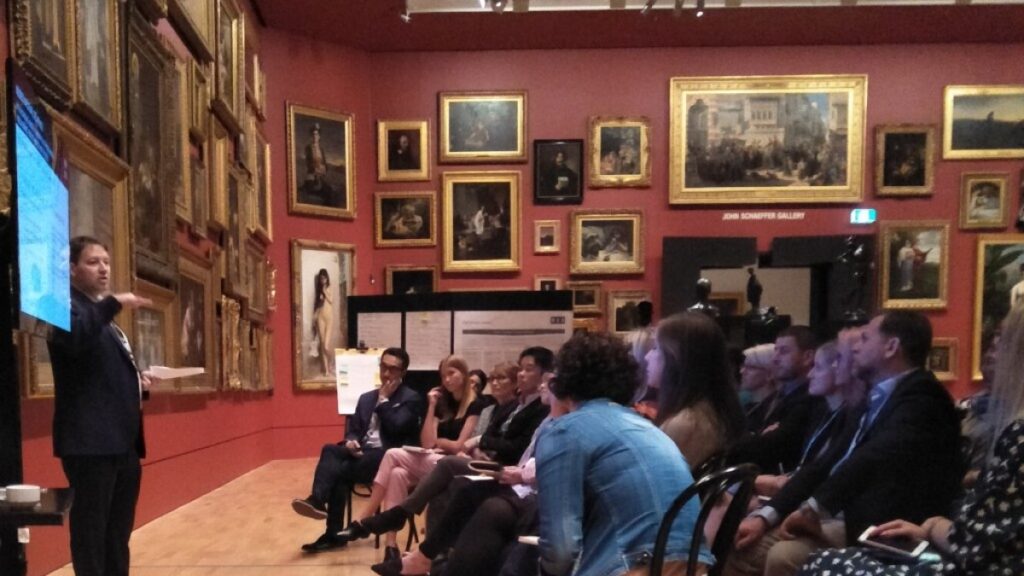
In 2018, leaders from major museums formed the International Audience Engagement Network to counter fragmented practices and ambiguous outcomes. A two‑day convening (25+ delegates) produced shared definitions, a universal value statement, and practical guidelines, expanded in 2021. The goal is to close gaps between audiences and curatorial practice, improve public value, strengthen legitimacy with funders and communities, and enable cross‑border learning without heavy tooling.
2. Observations
Governance: Before the Network, no accepted standard defined “good” audience engagement. A neutral forum enabled agreement on scope and principles across public, philanthropic, and mixed governance models. Establishing the Network supports iteration and international participation, but limited mandate, resourcing, and enforcement constrain updates and adoption.
Measurement: Institutions default to activity metrics (visitors, spend) that satisfy cultural/tourism funders, while inclusion and wellbeing stakeholders require social outcome evidence. Without shared definitions, data are non‑comparable and hard to aggregate. A minimal mixed‑methods framework would translate practice into credible, cross‑context evidence.
Scalability: Voluntary uptake lowers barriers but risks uneven adoption and reliance on early movers. Cross‑border policy variation (reporting regimes, grant conditions) complicates replication. Over‑standardisation could crowd out place‑led practice; under‑standardisation preserves fragmentation and cost.
Impact Diffusion: Publishing guidelines supplies portable language and focus areas (inclusion, audience experience), reducing duplication and aiding partner alignment. Diffusion remains constrained without incentives (accreditation, funder alignment) and crosswalks to adjacent frameworks (diversity, equality, inclusion, and wellbeing).
3. Research Considerations
The case reveals a missing layer of soft infrastructure: stewardship for a living standard, comparable measurement, lightweight interoperability, and incentives that protect local relevance while enabling comparability.
- Which governance model credibly maintains and updates the standard across jurisdictions?
- What minimum viable metrics compare inclusion and experience without distorting practice?
- How can funders and policymakers align incentives to encourage adoption while protecting place‑led approaches?