1. Context
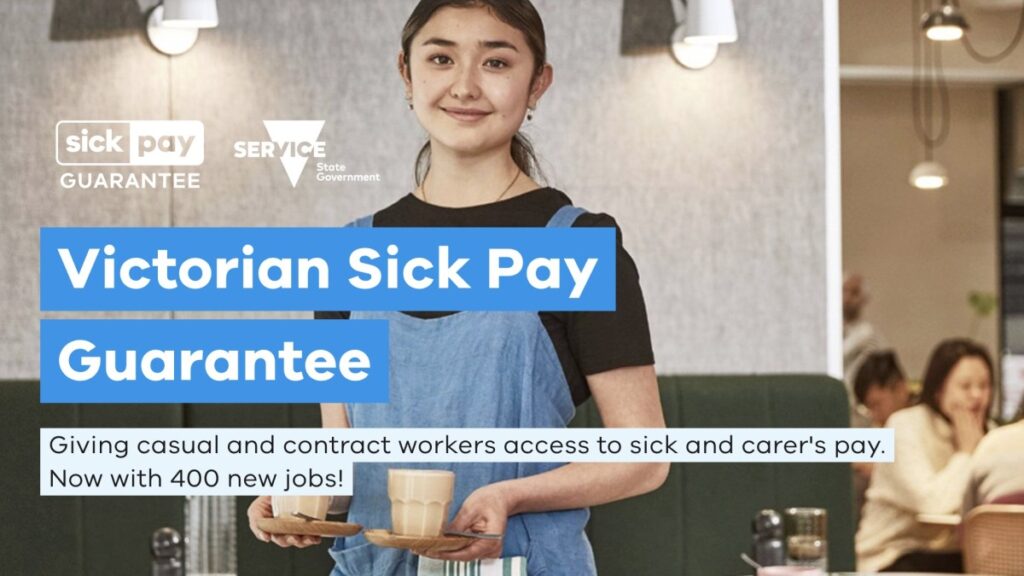
The State of Victoria committed $247 million to test whether access to sick pay for casual and gig workers could mitigate public health externalities through the Sick Pay Guarantee pilot program (2021–2024). The pilot reached more than 125,000 workers and processed more than 1 million claims with an average turnaround of 2 days and over 90% customer satisfaction. A fast, digital claims service provided operational evidence on eligibility, verification, and integrity controls to inform possible transition to permanent or nationally aligned arrangements.
2. Observations
Risk Absorption: The benefits of staying home when sick accrue to society, creating a free‑rider problem for individual firms. The state temporarily absorbed epidemic risk by funding portable sick pay, shifting the insurance function to government. A streamlined digital model traded simplicity and speed against proportionate integrity controls to maintain trust without deterring legitimate uptake.
Capital: Many affected sectors operate on thin margins; mandating employer or platform funding alone risks employment effects or cost pass‑through. Public financing de‑risked early adoption and created space to observe behavioural responses. A durable model likely needs a mixed funding stack (state, national, employers/platforms) matched to beneficiaries and ability to pay across cycles.
Governance: The pilot sat within federal industrial relations, tax, and benefits regimes not designed for portability across casual and gig work. Clear eligibility and verification improved user confidence, yet cross‑jurisdiction alignment (definitions, privacy, data‑sharing) remains a constraint. Transition governance—pilot to permanent, state to national—requires agreed standards for entitlements, data, and redress.
Measurement: Embedded monitoring produced robust administrative metrics (uptake, processing times, satisfaction). Decision‑makers also need behavioural and economic effects: substitution from unpaid absence, infection reduction, business continuity, and cost per claim over time. We are testing the assumption that publicly available, comparable evaluation evidence across jurisdictions remains limited.
3. Research Considerations
The case reveals that state‑level scaffolding can insure against public health externalities in insecure labour markets while generating operational evidence. Lasting impact depends on governance alignment, a credible funding mix, and shared measurement that travels across regimes without eroding access or trust.
- What minimum evidence and costing should trigger permanent or portable sick‑pay models?
- How should funding responsibilities be shared across government, employers, and platforms over time?
- Which data standards enable portability while protecting privacy and minimising administrative burden?